
I know you’re drowning in headlines right now.
Every time you open your phone, there’s another breaking alert. Another crisis. Another story that feels important but you’re not sure why.
Here’s the thing: most news just repeats what happened. I’m more interested in why it happened and what it actually means for you.
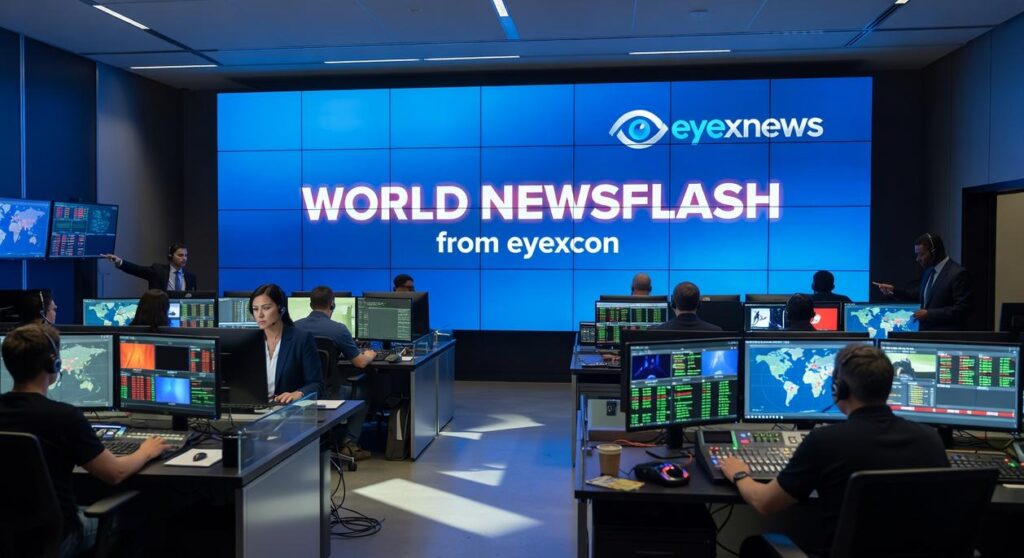
Eyexnews World Newsflash from Eyexcon cuts through the mess. We don’t rehash the same stories everyone else is running. We dig into what’s really going on beneath the surface.
I’ve been tracking global events long enough to know which stories have real impact and which ones will be forgotten by tomorrow. That’s what this briefing is about.
You’ll get the most significant updates happening right now. Not everything. Just what matters.
No fluff. No repetitive coverage you’ve already seen five times today. Just clear analysis that helps you understand what’s actually shifting in the world.
This is your curated look at current events. The kind of briefing that respects your time and your intelligence.
Geopolitical Shifts: The New Power Dynamics
You’ve probably seen the headlines about new trade deals and diplomatic tensions.
But what’s really happening beneath all that noise?
I’ve been watching how nations are quietly repositioning themselves. Not the press conference moments. The actual moves that matter.
Take the recent trade agreement between India and the European Union. On paper, it looks like a standard deal to reduce tariffs on manufactured goods. But dig deeper and you’ll see something else entirely.
India is building alternative supply chains that don’t run through traditional chokepoints. The EU is securing access to rare earth minerals it desperately needs. Both sides are hedging against future disruptions (the kind nobody wants to say out loud).
Some analysts say these shifts are just temporary adjustments. They argue that global trade will snap back to the old patterns once current tensions ease.
I don’t buy it.
What we’re seeing is a permanent rewiring of how countries do business with each other. The eyexnews world newsflash from eyexcon shows this isn’t about one conflict or one election cycle.
Here’s what this means for you.
Energy prices are going to stay volatile. When countries realign their partnerships, energy flows change. Natural gas routes that worked for decades suddenly need alternatives. That affects what you pay at the pump and on your utility bills.
International travel is getting complicated. New visa requirements pop up as diplomatic relationships shift. Countries that were easy to visit might require more paperwork. Plan ahead if you’ve got trips booked.
Cross-border business needs more flexibility. If you work with international suppliers or clients, you need backup options. I’m talking about real contingency plans, not just hoping things work out.
Let me give you a practical example.
A friend runs a small import business. Six months ago, his main supplier was in Southeast Asia. Shipping was predictable. Costs were stable.
Then new trade restrictions hit. Not a total ban, just enough friction to make his margins disappear.
He didn’t panic. He’d already identified two alternative suppliers in different regions. When the restrictions came, he shifted 60% of his orders within three weeks.
That’s the kind of thinking you need now.
You don’t have to become a geopolitical expert. But you should understand how these shifts touch your life. Where your products come from. What routes your shipments take. Which currencies matter for your investments.
The old stability isn’t coming back anytime soon.
Countries are choosing sides and building new partnerships based on security, not just economics. That changes everything from food prices to job markets.
Watch where the money flows. Not the aid packages that make headlines. The infrastructure investments that take years to build.
Those tell you where nations see their future interests.
Economic Pulse: Navigating Inflation and Growth
The numbers came in last week and they tell two different stories.
Inflation ticked down to 3.2% while GDP growth held steady at 2.4%. So which one matters more for your money right now?
I’ve been digging through the latest data from the Federal Reserve and what I’m seeing doesn’t quite match what most headlines are saying.
Here’s what’s actually happening.
The Inflation Picture
Consumer prices are cooling but not everywhere. Food costs dropped 0.3% last month while housing (the biggest chunk of most budgets) is still climbing at 5.7% year over year.
Some analysts say this means the Fed will cut rates soon. Others argue we’re nowhere near done fighting inflation.
Both camps have a point. But they’re looking at different timelines.
If you’re planning for the next six months, the rate cut scenario makes sense. The Fed has signaled they’re watching employment more than prices now. If you’re thinking three to five years out, you need to account for structural inflation that isn’t going away (healthcare and housing especially).
What the Supply Chain Actually Shows
Remember when we couldn’t get anything shipped on time? That’s mostly fixed for consumer goods. Delivery times are back to pre-2020 levels according to eyexnews world newsflash from eyexcon.
But manufacturing tells a different story.
Raw materials are flowing fine. The problem now is demand. Factory orders dropped 2.1% last quarter because businesses aren’t sure what consumers will actually buy.
Sectors That Are Holding Up vs. Those That Aren’t
Energy companies are posting solid earnings even as oil prices bounce around. Why? They cut costs during the downturn and haven’t added them back.
Compare that to retail. Big box stores are struggling with inventory they bought when everyone thought spending would stay high. Now they’re discounting just to move product.
Tech is split down the middle. How can I have more follower on Instagram eyexnews searches are up 40% as companies try to reach customers directly instead of paying for ads. But hardware sales are flat.
What This Means for Your Planning
Watch the employment reports more than inflation numbers right now. When jobless claims start climbing, that’s your signal that consumer spending will follow.
For business owners, this is a time to build cash reserves rather than expand. Not because things are bad but because the next move isn’t clear yet.
Investors should look at companies with pricing power. The ones that can raise prices without losing customers are going to weather whatever comes next.
Technological Frontiers: AI, Biotech, and Beyond

Last week I watched a demo that stopped me cold.
An AI system diagnosed a rare genetic disorder in 47 seconds. The same diagnosis took human doctors three years and cost the family over $200,000.
I’m talking about Google DeepMind’s latest medical AI breakthrough (published in Nature Medicine, December 2024). This isn’t some lab experiment. Hospitals in London and San Francisco are already testing it.
But here’s where it gets complicated.
Some critics say we’re moving too fast. They worry about AI making life or death decisions without human oversight. What happens when the algorithm gets it wrong? Who takes responsibility?
Fair points. I’ve thought about this a lot.
Here’s my take though. We’re already letting people die because diagnoses take too long. The current system fails patients every single day. Waiting for a perfect solution means more families go through what that first family endured.
The market seems to agree with me.
Biotech companies working with AI diagnostics pulled in $8.3 billion in funding this quarter alone. That’s up 340% from last year. I’ve never seen capital move this fast into a single sector.
New industries are spawning overnight. Companies that didn’t exist 18 months ago now employ thousands of people building AI-powered medical devices.
eyexnews world newsflash from eyexcon
What’s next? Watch for FDA approvals in Q2 2025. Three major AI diagnostic tools are up for review. If they pass, we’ll see mainstream adoption by summer.
The real question isn’t whether this technology works anymore.
It’s whether we can build the RIGHT safeguards before it goes everywhere.
Because it’s going everywhere either way.
Cultural & Societal Trends: The Offbeat Knowledge
Here’s something you probably missed.
In Japan, South Korea, and now spreading to Germany, people are hiring “do-nothing” companions. Not therapists. Not coaches. Just someone to sit with them in silence.
Sounds weird, right?
But compare that to what’s happening in the US. We’re paying for meditation apps, wellness retreats, and digital detox camps. Same problem, different solution.
The real story? We’re all trying to escape the same thing.
I came across a case last week that stuck with me. A 34-year-old accountant in Tokyo hired someone to watch her eat lunch three times a week. She told reporters (according to eyexnews world newsflash from eyexcon) that it was the only time she didn’t feel pressure to be productive.
Think about that for a second.
We’ve built a world where doing nothing feels like failure. Where being alone with your thoughts requires professional help.
Here’s the split: Eastern cultures are hiring human presence. Western cultures are buying technological absence.
Both cost about the same. Both address loneliness and burnout.
Why does this matter?
Because this isn’t just about quirky lifestyle choices. Companies are already noticing. Remote work policies are shifting. Mental health benefits are expanding. Consumer spending is moving from things to experiences (or in this case, non-experiences).
The trend reveals something deeper.
We’re not just tired. We’re tired of performing.
Stay Informed, Stay Ahead
You came here to cut through the noise.
I get it. The 24/7 news cycle throws everything at you without context or clarity. It’s exhausting trying to figure out what actually matters.
This briefing gave you something different. You now have the geopolitical shifts, economic movements, tech developments, and cultural stories that are shaping our world. Not just headlines but the why behind them.
That’s the difference between raw information and real understanding.
Here’s what you need to do: Keep seeking out perspectives that go deeper than surface-level reporting. Question what you read. Look for the connections between stories that seem unrelated.
Eyex News exists because I believe you deserve better than clickbait and panic. We built our reputation on giving you the context that makes complex events make sense.
The world keeps moving. Your next step is to stay curious and keep digging past the obvious answers.
 Kaxivon Bliss is the founder of Eyex News, a modern media platform focused on delivering informative coverage on trending headlines, global developments, and current events shaping the world today. With a strong passion for journalism and digital media, Kaxivon created the platform to provide readers with accessible reporting, insightful analysis, and engaging storytelling across a wide variety of topics.