

I’ve been in the news business long enough to know that most people can’t tell the difference between fast news and accurate news anymore.
You’re probably here because you’re tired of clicking on headlines that promise breaking stories but deliver half-truths or worse. Or maybe you’ve been burned by sources that got the facts wrong just to be first.
Here’s what matters: speed means nothing if the information is garbage.
I’m going to show you what separates a reliable news source from the noise. Not with vague promises about integrity. With specifics about how eyexnews actually operates.
This article breaks down the methods we use to verify information before it reaches you. I’ll explain how we balance breaking news coverage with the kind of analysis that helps you understand what’s really happening.
We cover everything from trending headlines to the stories most outlets ignore. But coverage means nothing without a system that keeps misinformation out.
You’ll learn what to look for in any news source, not just ours. How fast should breaking news really be? What does real fact-checking look like? When should you trust analysis over raw reporting?
No fluff about journalistic values. Just a clear look at how eyexnews delivers current events and why that approach matters for readers who need both speed and accuracy.
The Bedrock of Reliability: A Commitment to Accuracy and Unbiased Reporting
I won’t pretend this is simple.
Trust in news has taken a beating. You’ve probably clicked on a story only to find out later it was half true or completely wrong.
That’s not how we do things at eyexnews.
Let me break down what actually happens before a story goes live.
Multi-Source Verification
We don’t run with one source. Ever.
Before I publish anything, I need confirmation from at least two independent sources. Sometimes three (depending on how big the claim is).
What does independent mean? It means the sources can’t be connected. They can’t work together or share the same information pipeline. If Source A got their info from Source B, that’s one source, not two.
Here’s what confuses people. They think verification just means calling someone and asking if something is true. That’s part of it, but verification also means checking documents, reviewing public records, and comparing timelines.
Correction and Transparency Policy
We mess up sometimes.
When we do, you’ll see it. Right at the top of the article with a timestamp showing exactly when we made the correction and what changed.
No hiding it in fine print. No quiet edits hoping nobody notices.
If we get something wrong, we say so. We explain what the error was and what the correct information is. You deserve to know when we’ve updated our reporting and why.
Separating News from Opinion
This trips people up all the time.
News reporting means I tell you what happened. Who said what. When it occurred. The facts without my take on it.
Opinion and analysis? That’s where I tell you what I think it means or why it matters.
We label them differently. News pieces stick to the facts. Analysis pieces include interpretation and context.
You get to decide which one you need right now.
Speed Meets Substance: Delivering Breaking Stories Responsibly
You’ve seen it happen.
A major story breaks and within minutes your feed fills up with conflicting reports. Half of them turn out to be wrong.
The race to be first often means accuracy gets left behind.
But what if I told you that speed and substance don’t have to be enemies? That you can get breaking news fast without wading through misinformation?
Here’s how we do it.
Real-Time Reporting That Actually Works
Most newsrooms still operate like it’s 2010. They wait for every detail before publishing anything.
We built something different.
Our reporting infrastructure connects journalists across time zones with a verification system that runs in real time. When something breaks, our team on the ground starts confirming details immediately while our editors cross-reference multiple sources.
Think of it like this. Traditional news waits until the puzzle is complete. We show you the confirmed pieces as they lock into place.
The difference? You get accurate information in minutes instead of hours.
The Living Story Approach
Breaking news doesn’t happen all at once. It unfolds.
So we report it that way.
When a story breaks, you’ll get an initial alert with only what we’ve confirmed. No speculation. No maybes. Just facts we’ve verified through at least two independent sources.
Then the article grows. We update it as new information comes in and gets confirmed. You can see what’s new and what we knew an hour ago.
| Stage | What You Get | Timeframe |
|———–|——————|—————|
| Initial Alert | Core confirmed facts | 5-15 minutes |
| First Update | Context and background | 30-60 minutes |
| Full Coverage | Complete analysis | 2-4 hours |
This living story model means you’re never choosing between speed and depth. You get both.
Cutting Through the Chaos
The hardest part of breaking news isn’t finding information. It’s knowing what to ignore.
Social media explodes with rumors during major events. Unverified claims spread faster than facts. Even well-meaning people share things that turn out to be false.
Our journalists are trained to filter this noise. They know the difference between a credible source and someone guessing. They understand that being second with the truth beats being first with a lie.
During chaotic situations, we ask three questions before publishing anything. Can we confirm this through a direct source? Does it align with other verified information? Would we stake our reputation on it?
If the answer to any of those is no, it doesn’t go out.
That’s why when you see a breaking story from eyexnews, you can trust it. We’ve already done the hard work of separating fact from fiction.
You get the news fast. But you also get it right.
Beyond the Mainstream: Comprehensive Coverage for a Curious Mind
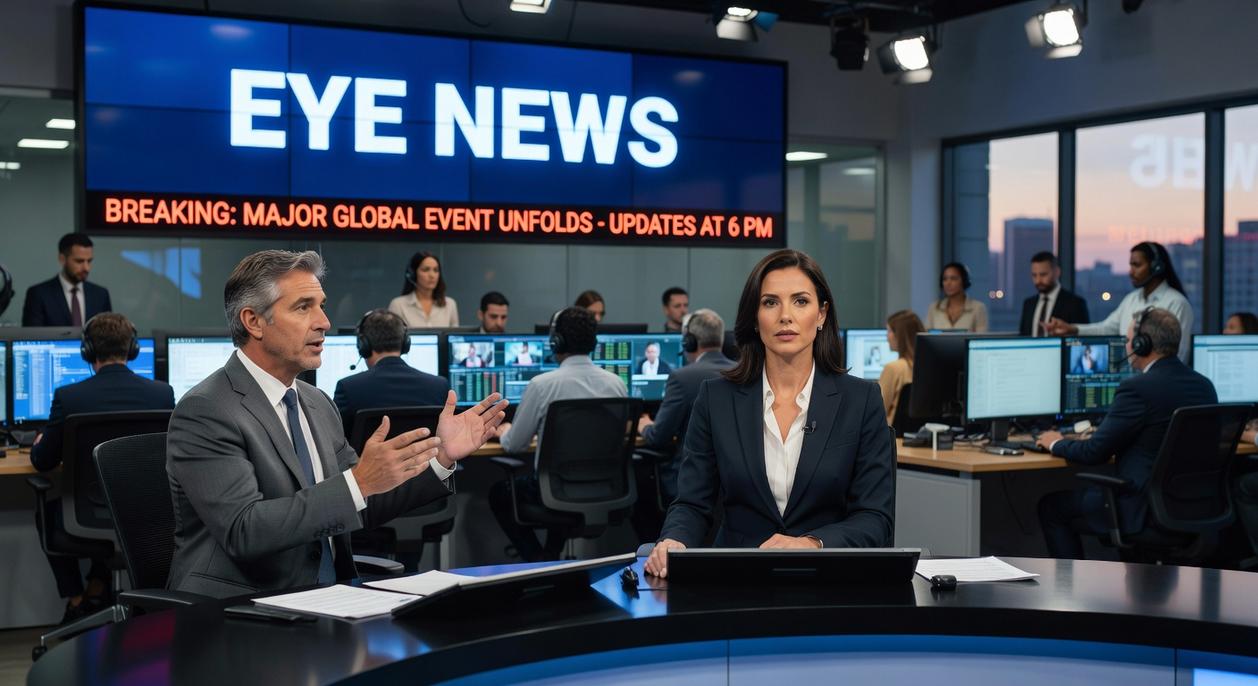
Most news outlets pick a lane and stay there.
Breaking news. Political drama. Celebrity gossip.
I built EyeX News differently because I was tired of choosing between staying informed and staying interested.
Here’s my take. You shouldn’t have to sacrifice depth for breadth. Or trade mainstream coverage for the weird stuff that actually makes you think.
We cover the big stories everyone’s talking about. Political shifts. Economic changes. Breaking developments that affect your daily life. The stuff you need to know to understand what’s happening right now.
But we don’t stop there.
I’ve always believed the best journalism asks why. Not just what happened, but what it means. So we dig deeper into the stories that matter. Long-form pieces that explore economic trends before they hit your wallet. Social movements before they reshape your neighborhood. Policy changes before they change your options.
That’s the foundation.
Then there’s the part I’m most proud of. The offbeat knowledge that makes how can i have more follower on instagram eyexnews different from everything else out there.
Science discoveries that don’t make the front page but should. Historical events that explain today better than today’s headlines. Cultural phenomena happening in corners of the world you’ve never thought about.
This isn’t filler content. It’s the stuff that expands how you see things.
Some editors tell me we should focus on one thing. Go all-in on politics or all-in on quirky stories. Pick our audience and stick with it.
I disagree.
You’re not one-dimensional. Your curiosity doesn’t fit in a box. Why should your news source?
We’re here for people who want both. The headlines and the hidden gems. The urgent and the fascinating.
Because staying informed shouldn’t mean staying bored.
From Information to Insight: The Analytical Edge
Most news outlets tell you what happened.
EyeX News shows you why it matters.
There’s a difference. A big one.
When a policy shifts or a market crashes, you don’t just need the headline. You need the backstory. The political pressure that built up for months. The social movements that made it inevitable.
Context is everything.
I recommend you look for news sources that connect the dots. Not just the ones that race to publish first.
Here’s what I do when I read any story. I ask myself three questions. What led to this? Who benefits? What happens next?
If the article doesn’t help me answer those, I move on.
At eyexnews, we use data to cut through the noise. Charts that show you patterns over time. Statistics that reveal what’s really changing (not just what feels different). Expert voices that add perspective you won’t find in a press release.
This isn’t about dumbing things down.
It’s about making complex topics clear. There’s a difference between simple and simplistic.
My advice? Stop consuming news passively. Start looking for sources that give you the tools to think critically about what you’re reading.
When you see a breaking story, wait for the analysis. The context. The data that shows whether this is an outlier or part of a bigger trend.
That’s how information becomes insight.
Your Trusted Partner in an Information-Rich World
I built eyexnews on four things that matter: accuracy, speed, complete coverage, and analysis that actually helps you understand what’s happening.
Trust is hard to find these days. You need a news source you can count on, and that’s not a luxury anymore. It’s a requirement.
eyexnews gives you a clear window into the events shaping our world. No spin. No agenda. Just credible reporting that covers what you need to know.
You came here looking for news you can trust. Now you know where to find it.
Here’s what to do next: Browse our latest headlines and check out some of our offbeat stories. You’ll see the difference right away.
We cover everything from breaking news to the stories that slip through the cracks. The kind of reporting that keeps you informed without wasting your time.
Your next step is simple. Start reading and see for yourself.
 Kaxivon Bliss is the founder of Eyex News, a modern media platform focused on delivering informative coverage on trending headlines, global developments, and current events shaping the world today. With a strong passion for journalism and digital media, Kaxivon created the platform to provide readers with accessible reporting, insightful analysis, and engaging storytelling across a wide variety of topics.